Thursday, December 27, 2007

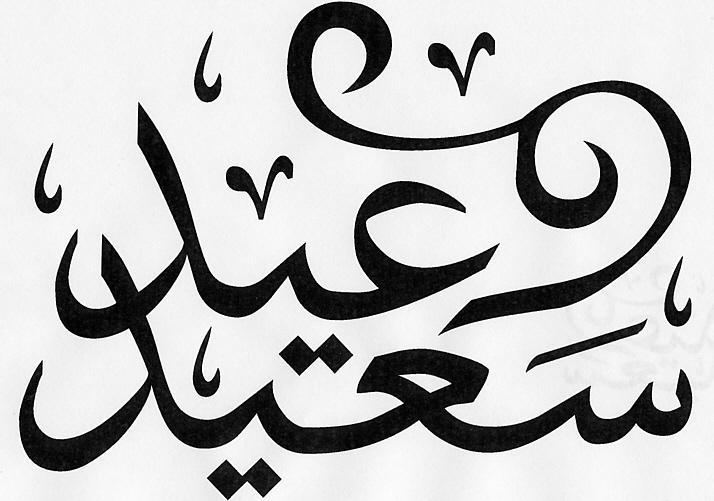
Eid, Meat and Gideed
The highlight of the four hectic days of Eid ul Adha, or the Big Feast as it’s unofficially known, is a barbeque. On the morning of the first day which mark the end of the hajj an udhia is sacrificed, and a portion of the meat given to poor neighbours or to the mosque to distribute. Then there is the marathon job of cutting up the meat, and a grill-up that can be brunch, dinner or everything in between; the latter is what it usually ends up being as friends and family drop by for eid greetings and stay to sample the food.
Supper is a casserole or stew, served with a potato and herb omelette, which is eaten wrapped up in ftat, delicious egg less pancakes. Each family has a particular ‘Eid stew’ and charges of violating sibir are invoked if anyone suggests a little variation.
So the first day, unlike many celebrations, doesn’t revolve around an elaborately prepared banquet, but osban sausages, served on couscous or rice and accompanied by msayar pickles, is the dinner for the second day. Making sausages is a time consuming, labour intensive process; and with all the chopping needed for the osban stuffing of rice, meat, liver, spring onions, parsley, coriander, dill, basil, chillis, and garlic, its lucky that Libyan women know how to turn it into festive activity with gossip, jokes and even impromptu poetry battles; an experienced Haja directing operations from behind the ed’ala paraphernalia, while supplying everyone with cups of tea at a rate which keeps the younger girls busy scurrying back and forth with trays.
But the real distinctive food of Eid ul Adha is not eaten during the Eid at all; instead it provides decorations to rival Cairos’s lights and lanterns announcing Ramadan. But unlike our half-hearted adoption of the Egyptian custom, almost every Libyan garden and balcony is festooned for days after Eid with pylon rope on which meat is hanging out to dry.
Gideed might not bear comparison with Ramadan displays in aesthetic terms, but it does have an illustrious history which rivals the Fatimid era origins of fawanees Ramadan: dried meat has been found buried with Pharaohs to sustain the mummies on their journey to the afterlife, it formed an essential part of the diet of Phoenician sailors, and the nomadic tribes inhabiting the sea of sand that is the Libyan desert also depended on this portable and virtually unspoilable protein and calorie rich food.
Every family sets aside a portion of their udhiaa sheep to make into gideed, marinating well salted strips of meat in olive oil, turmeric and red pepper. Once sundried the meat is chopped into bite-size pieces, then fried and stored in containers sealed with samn and olive oil. It’s more economical than fresh or frozen meat as the intense flavour means a little goes a long way, and it saves time too as it’s precooked, qualities that make it an essential store cupboard standby in Libyan households.
Gideed, tomato paste and water cooked for a few minutes is all that is needed for a versatile base for one pot meals: spicy soups, stews with all knds of vegetables from beans to pumpkin, and the wintertime favourite haja jarya of pasta, rice, cracked wheat or mgata noodles cooked in a rich sauce. The addition of spices, herbs, and pulses like lentils, fenugreek seeds, and chickpeas makes endless variations possible.
Supper is a casserole or stew, served with a potato and herb omelette, which is eaten wrapped up in ftat, delicious egg less pancakes. Each family has a particular ‘Eid stew’ and charges of violating sibir are invoked if anyone suggests a little variation.
So the first day, unlike many celebrations, doesn’t revolve around an elaborately prepared banquet, but osban sausages, served on couscous or rice and accompanied by msayar pickles, is the dinner for the second day. Making sausages is a time consuming, labour intensive process; and with all the chopping needed for the osban stuffing of rice, meat, liver, spring onions, parsley, coriander, dill, basil, chillis, and garlic, its lucky that Libyan women know how to turn it into festive activity with gossip, jokes and even impromptu poetry battles; an experienced Haja directing operations from behind the ed’ala paraphernalia, while supplying everyone with cups of tea at a rate which keeps the younger girls busy scurrying back and forth with trays.
But the real distinctive food of Eid ul Adha is not eaten during the Eid at all; instead it provides decorations to rival Cairos’s lights and lanterns announcing Ramadan. But unlike our half-hearted adoption of the Egyptian custom, almost every Libyan garden and balcony is festooned for days after Eid with pylon rope on which meat is hanging out to dry.
Gideed might not bear comparison with Ramadan displays in aesthetic terms, but it does have an illustrious history which rivals the Fatimid era origins of fawanees Ramadan: dried meat has been found buried with Pharaohs to sustain the mummies on their journey to the afterlife, it formed an essential part of the diet of Phoenician sailors, and the nomadic tribes inhabiting the sea of sand that is the Libyan desert also depended on this portable and virtually unspoilable protein and calorie rich food.
Every family sets aside a portion of their udhiaa sheep to make into gideed, marinating well salted strips of meat in olive oil, turmeric and red pepper. Once sundried the meat is chopped into bite-size pieces, then fried and stored in containers sealed with samn and olive oil. It’s more economical than fresh or frozen meat as the intense flavour means a little goes a long way, and it saves time too as it’s precooked, qualities that make it an essential store cupboard standby in Libyan households.
Gideed, tomato paste and water cooked for a few minutes is all that is needed for a versatile base for one pot meals: spicy soups, stews with all knds of vegetables from beans to pumpkin, and the wintertime favourite haja jarya of pasta, rice, cracked wheat or mgata noodles cooked in a rich sauce. The addition of spices, herbs, and pulses like lentils, fenugreek seeds, and chickpeas makes endless variations possible.
Thursday, December 20, 2007

Saturday, December 15, 2007
Nabil Moussa: Artist? Craftsman?

hibo has discovered Ali Baba's cave...on the bbc site: a photo journal on a Libyan brass engraver, who bases his designs on Christie's antique price guide and hopes to expand through the internet.
Thursday, December 13, 2007
All That Glitters
A Libyan lama: women occupying the guest’s sitting room in a friend's house, dressed up in their best and decked out in jewelry, the talkfest only interrupted by relays of trays. It couldn’t be more different from a busy stock exchange floor.
But at a lama, every topic is discussed with gusto and plenty of gesticulation, and one thing that’s sure to come up is the price of gold, down to the last decimal point; with predictions of future fluctuations taking into account everything, from the birth pangs of the new Middle East to rising demand in China, the weakening dollar and warnings of a global recession. It’s like listening to a room full of Farah Albaraqawis, only all the economic news is seen through gold-tinted glasses.
 A girl is initiated into this dazzling world before she’s a month old. The most common gift for a newborn girl is jewelry, especially pendents. These are quite distinctive, there are engravings of Quranic verses, quirky ones like teapots, and charms based on pre-Islamic ‘magical’ symbols like the fish, hand, eye and the horn (which also survived in henna patterns and weaving - like carpets and silks); believed to ward off the evil eye. Within weeks, or sometimes days, of birth a girl will also have her ears pierced, and there are even miniature bracelets, so all that’s missing is a ring.
When all the relatives and friends have given their congratulations, she’ll have quite a collection with which to start a gold hoard, which steadily accumulates through presents for Eid, birthdays and good exam results. Of course some pieces will get broken, and not everyone wants to keep baby pendants for sentimental value, so there are plenty of opportunities to learn the basic rules to managing your gold fund: obviously to buy when the price falls, if you have things you want to get rid of hold onto them if possible till its back up again, or at least only sell when you’ve decided on exactly what you want instead.
More important are the endlessly drummed perquisites to a good buy - as few jewels as possible (as they’re weighed as gold when you buy but removed if you sell), to only buy 18 carat or above, and to avoid designer pieces like the plague, as they date quickly and a big percentage of the price is not in the recoverable net weight.
So all in all, shopping for jewellery is defiantly not for magpies attracted to shiny things, it calls for a disciplined investor’s eye.The goal is a stash that can be worn, loaned to friends and relatives, and updated with minimal extra outlay, and which can also be turned to cash when needed. If any pieces are not used regularly 2.5 % the value is given in Zakah each year, as they are regarded as savings in Islamic law, and a percentage is owed to charity.
 Wearable wealth goes back a long time, and the older designs, with coins or even gold nuggets on a chain, make their function very clear. The craftsmen who make the jewelry worn with the traditional costume still use coins for decorative purposes, but they have to ‘mint’ their own since the Ottoman lira is a collectors’s piece now - forgery in 24 carat gold.
 A complete set of Libyan jewelry includes the necklace, the most important piece, which can be anything from one row to five, and comes in many designs (with names like ‘the company’ and ‘the crescents’), matching earrings, and a multitude of rings and bangles – not to mention ‘extras’ like anklets, tiaras, and gold belts.
The jewellery has become more elaborate and expensive over the past few decades, so affordable versions are produced which are beaten very thin, making them fragile, and much less attractive than the cheaper and more durable gold plated silver sets which are now becoming more acceptable, even for a dowry. A ‘fake’ set means the bride can still wear the traditional suit, but receives more modern jewellery. Although such sets can’t be exchanged as real gold can, they’re not worn more than a few times a year; and there are even jewelry rental shops opening up to cater to those who still want to keep up with the latest designs.
All of this seems to be the death knell of traditional jewelry making, buying and wearing. But actually heavy silver jewellery and lighter gold pieces were what earlier generations wore, so perhaps modern conditions are turning women back to more reasonable, if less picturesque, jewellery.
Tuesday, December 11, 2007
Tuesday, December 4, 2007
Libyans, Literature….and the Internet
A decade ago everyone was buying satellite dishes, which seemed almost revolutionary, transforming the audience into channel hoppers, with the full spectrum of Arab (and sometimes European and American) perspectives available at the press of a remote control button.
Now, as internet access becomes easier and more affordable, younger Libyans are increasingly switching off the TV and logging in to the internet – ideally this would be a positive development from a passive TV viewer to an Internet surfer, with an infinitely expanding world wide web a mouse click away. But walk into a net café in any Libyan city and there are knots of teenagers crowding together around one monitor to egg on their friend ‘chatting’ to the keyboard, making the supposedly boundless possibility of the virtual world seem pure fantasy.
Of course as the cliché has it chat, like the rest of the internet or the TV for that matter, is just a tool, its how you decide to use it; like forums and social networking sites, it’s a great way to keep in touch with family and friends, and to exchange ideas with people from around the world.
Perhaps another, more creative way to the same end are blogs, websites published chronologically, regularly updated with fresh posts, usually allowing readers to add their response.
The Libyan blogosphere has grown considerably in the last few years, although a late developer compared to the Egyptian or Jordanian for example, and it’s a Libyan blog that has won the Best of the Blogs award this year.
As blogging has become a wider phenomenon, interest by traditional media has grown proportionally. DW, Germany’s answer to BBC World, has since 2004 organised an international competition, somewhat redundantly called the Best of the Blogs; with a jury award (decided by a committee of “independent journalists, media experts and blog experts”) and a user prize (for the blog with the most online votes) in each of the 15 categories.
The competition includes blogs in Arabic, Chinese, Dutch, English, French, German, Persian, Portuguese, Russian and Spanish; and they can be text based blogs, videoblogs or podcasts (multimedia broadcasts which can include pictures, video and audio); and range from the personal diary to political podium, from celebrity scandal to the art appreciation.
Imtidad (imtidad.blogspot.com), a blog and podcast by Libyan writer, Ghazi Gheblawi, won the BOBs user award for Best Arabic Weblog after receiving the most votes; despite stiff competition by blogs on everything from pop culture to business, from technology to politics.
Imtidad received 15 % of the votes, compared with 13% for the blog selected for the jury prize in the same category, Aljazeera Talk, a very impressive group blog with over 70 writers – or citizen journalists as they prefer to call themselves.
Al Jazeera, whose dominance of the Arab satellite era is undisputed, seems to want to make sure that the next generation also grow up in an ‘Aljazeera decade’; not only do they have one of the most visited Arab websites, but they’re financing Aljazeera Talk and making sure its one of the most talked about blogs by frequently inviting its contributors for interviews and debates.
By contrast Imtidad is a personal blog without such support, and with a ‘niche’ focus on culture and literature, which if we accept the stereotype of the representative Arab internet user as chat addict would not find an audience.
Imtidad is both a regular text based web journal and a podcast; both are mainly in Arabic but there are also blog posts and podcast episodes in English, as part of Gheblawi’s aim is to “bridge th[e] gap between Libyan creative writing, in its original Arabic language, and world literature, in the form of English language”; which does not mean that he focuses exclusively on Libyan or even Arab culture - his podcast recently featured a Ghanian poet, a South African novelist, an Iraqi artist and a Mexican director.
The bilingual podcast (English and Arabic versions) received 16% of the votes for best podcast, coming in third behind the Brazilian Nerdcast and the French Oh la! Radio, and beating a German blog on “Literature, trash and bad moods”.It was the latter, Die Gefühlskonserve, that received the jury prize for best podcast, which was an interesting contrast because the user prize in German went to a humorous blog by an undertaker.
This was reversed when it came to the Best Arab Blog award, with the jury consistently opting for more political Arab blogs, as fitting in a ‘middle-eastern’ context, while the voters picked Imtidad this year, and the Lebanese literary blog The Nostalgic Storyteller last year.
So Imidad is, as it presents itself, part of a wider trend; and Ghazi Gheblawi’s recent work (his second short story collection contains a story written collaboratively with Adel Aziz on an Arab literary website, and he shared the first chapter of his novel-in-progress on the blog with his readers) shows him to be part of a “new generation of Arab intellectuals, who are active online, enriching the Arab online cultural scene” and revitalising offline literary life as well, with new energy, new readers, and new means for creative cooperation between writers.
Now, as internet access becomes easier and more affordable, younger Libyans are increasingly switching off the TV and logging in to the internet – ideally this would be a positive development from a passive TV viewer to an Internet surfer, with an infinitely expanding world wide web a mouse click away. But walk into a net café in any Libyan city and there are knots of teenagers crowding together around one monitor to egg on their friend ‘chatting’ to the keyboard, making the supposedly boundless possibility of the virtual world seem pure fantasy.
Of course as the cliché has it chat, like the rest of the internet or the TV for that matter, is just a tool, its how you decide to use it; like forums and social networking sites, it’s a great way to keep in touch with family and friends, and to exchange ideas with people from around the world.
Perhaps another, more creative way to the same end are blogs, websites published chronologically, regularly updated with fresh posts, usually allowing readers to add their response.
The Libyan blogosphere has grown considerably in the last few years, although a late developer compared to the Egyptian or Jordanian for example, and it’s a Libyan blog that has won the Best of the Blogs award this year.
As blogging has become a wider phenomenon, interest by traditional media has grown proportionally. DW, Germany’s answer to BBC World, has since 2004 organised an international competition, somewhat redundantly called the Best of the Blogs; with a jury award (decided by a committee of “independent journalists, media experts and blog experts”) and a user prize (for the blog with the most online votes) in each of the 15 categories.
The competition includes blogs in Arabic, Chinese, Dutch, English, French, German, Persian, Portuguese, Russian and Spanish; and they can be text based blogs, videoblogs or podcasts (multimedia broadcasts which can include pictures, video and audio); and range from the personal diary to political podium, from celebrity scandal to the art appreciation.
Imtidad (imtidad.blogspot.com), a blog and podcast by Libyan writer, Ghazi Gheblawi, won the BOBs user award for Best Arabic Weblog after receiving the most votes; despite stiff competition by blogs on everything from pop culture to business, from technology to politics.
Imtidad received 15 % of the votes, compared with 13% for the blog selected for the jury prize in the same category, Aljazeera Talk, a very impressive group blog with over 70 writers – or citizen journalists as they prefer to call themselves.
Al Jazeera, whose dominance of the Arab satellite era is undisputed, seems to want to make sure that the next generation also grow up in an ‘Aljazeera decade’; not only do they have one of the most visited Arab websites, but they’re financing Aljazeera Talk and making sure its one of the most talked about blogs by frequently inviting its contributors for interviews and debates.
By contrast Imtidad is a personal blog without such support, and with a ‘niche’ focus on culture and literature, which if we accept the stereotype of the representative Arab internet user as chat addict would not find an audience.
Imtidad is both a regular text based web journal and a podcast; both are mainly in Arabic but there are also blog posts and podcast episodes in English, as part of Gheblawi’s aim is to “bridge th[e] gap between Libyan creative writing, in its original Arabic language, and world literature, in the form of English language”; which does not mean that he focuses exclusively on Libyan or even Arab culture - his podcast recently featured a Ghanian poet, a South African novelist, an Iraqi artist and a Mexican director.
The bilingual podcast (English and Arabic versions) received 16% of the votes for best podcast, coming in third behind the Brazilian Nerdcast and the French Oh la! Radio, and beating a German blog on “Literature, trash and bad moods”.It was the latter, Die Gefühlskonserve, that received the jury prize for best podcast, which was an interesting contrast because the user prize in German went to a humorous blog by an undertaker.
This was reversed when it came to the Best Arab Blog award, with the jury consistently opting for more political Arab blogs, as fitting in a ‘middle-eastern’ context, while the voters picked Imtidad this year, and the Lebanese literary blog The Nostalgic Storyteller last year.
So Imidad is, as it presents itself, part of a wider trend; and Ghazi Gheblawi’s recent work (his second short story collection contains a story written collaboratively with Adel Aziz on an Arab literary website, and he shared the first chapter of his novel-in-progress on the blog with his readers) shows him to be part of a “new generation of Arab intellectuals, who are active online, enriching the Arab online cultural scene” and revitalising offline literary life as well, with new energy, new readers, and new means for creative cooperation between writers.
Friday, November 23, 2007
The Best Of the Blogs
 Deutsche Welle's International Weblog Awards have been anounced!...and I just found out that Imtidad, a blog and podcast by Lybian writer, Ghazi Gheblawi, was voted Best Blog in the Arabic Category!! And it came in 3rd for Best Podcast!!
DW's Jury Award for Best Arabic Weblog went to Aljazeera Talk, and Alive in Baghdad was their choice for Best Video Blog.
Last year there was some controversy over the Jordanian blog Khobbeizeh, which apparently disappeared from the voting lists because of the blogger's political opininons?!
But as the blog was put back up again with fewer votes, maybe they just discovered some voting irregularities, as happened this year.
 Anyway Khobbeizeh is a great blog, so I'm adding it to my favourites...which will have grown exponentially by the time I've gone through the BOBs nominee list.
Sunday, November 18, 2007
Shahrazad Goes Live

I don't always agree with Fatima Mernissi, but she does have the most fantastically bizarre and yet wondefully commensensical ideas.
In 'The Satellite, The Prince and Sheherazade', she explores "the empowerment dynamics of satellite broadcasting" and "Arab audiences' fascination with strong female hosts and war reporters". These women, who have become household names across the Arab world, fit the "Sheherazade profile, the brainy, self-confident storyteller":
Promoting strong female stars has proven to be a fantastic asset for the Saudis' most threatening TV rival. Al Jazeera is winning crowds every night through the eloquence of its news anchors, Jumana Nammour and Kaduja Bin Guna, and economics expert Farah al-Baraqaui. While state televisions and oil-funded channels traditionally limited their staff by censoring them and denying them the right to decide freely about their program content and what guests to invite, Al Jazeera'ssuccess is due precisely to the freedom its programmers and speakers enjoy, which allows them to become credible communicators. "
 Channels that want to be viable are required to rely much more heavily on high-impact 'brands' and product lines. Al Jazeera demonstrated the worth of such assets when it developed a range of programs whose titles and presenters have become household names inside and outside the Arab world," explains Naomi Sakhr, the author of Satellite Realms: Transnational Television, Globalization and the Middle East.
The most famous reporters in the Middle East today are probably the Palestine-based Al Jazeera reporters, Shirin Abu 'Aqla and Jivara al-Badri, who are admired for their courage and professionalism. "History will remember that day when there was no one to speak up in the entire Arab nation, from the Atlantic to the Persian Gulf, but women such as Shirin Abu 'Aqla and Jivara al Badri and Leila Aouda," comments Ali Aziz, the columnist of the avant-garde Egyptian magazine 'Critiques' (An-Nuqqad), "while male leaders and gallon-wearing generals have disappeared from our sight and hearing."
Fairuz's ya sharazade
Katia Nasser discussing her experience as a war correspondent during the 33 day war:
'Free Sami' Button

Tasnim from epiphanies has created a new button, linking to the Reporters Without Borders petition, to support Aljazeera cameraman Sami Alhaj.
Thursday, November 15, 2007
Baring the Burden
 Whatever might be said of his fiction, Rudyard Kipling is not the best of poets. His poem "The White Man's Burden" for example, is a hackneyed hymn to the colonialist and his civilising mission.
The motivation was to encourage America’s takeover of the Philippines, which many see as the beginning of a long list of colonial interventions by the former colony, ostensibly founded on opposition to the injustice of the old world.
Kipling’s aim leads him to depict the colonial enterprise as a philanthropic challenge; this notion is of course the usual justification, but that’s precisely the point. The poem is an articulation of the imperial imagination, and the title encapsulates this most basic of its tenets in a phrase that has been appropriated by postcolonial critics of empire (and neo-colonial ones for that matter), for uses other than the ones the poet intended.
On the face of it, the contemporary discourse depicting Africa as a “scar on the conscience of the West” might seem the opposite of Kipling’s “White man's burden”; but while it implies an acknowledgement of guilt (which is a key component driving Western aid to the continent) it is significant that the phrase is in figurative terms a variation of the white man’s burden. The colonised other is a burden which the West must lift, while Africa is a scar the West bears – both passive objects of the West’s desired self-image.
The recent attempted abduction of 103 children in Chad is an example of the manipulation required to maintain this self-image. The European ‘aid workers’ in the case lied to the locals, claiming that they would be setting up a home in the capital N’djamena, offering their children a better life and (crucially) education. According to the group anything was justified in their effort to save the children from death and abuse, but even this Machiavellian rationalization does not hold water, as they had to manufacture their Darfur orphans using bandages and iodine to fake the 'war-wounded' look, as footage shot by a journalist accompanying the ‘rescue mission’ shows.
This journalist did not go to the authorities, and only released his video after the group was arrested; his justification being that he didn’t see the children being abused! Such reasoning is revealing: he would not have considered filming a kidnapping in his hometown without interfering. His excuse is in fact a testament to the power of the simplified and distorted image of Africa projected by global and particularly Western media: there’s a definite sense that, all things considered, the children would be much better off with European foster parents, away from the Africa and its endless troubles. Their anguished relatives’, interviewed on Aljazeera, see things differently.
‘The King Kong’ syndrome is Rey Chow’s name for a form of first world consumption in which the 3rd world is mined for thrilling scenes and stories of human misery. Tragic events supply melodramatic entertainment which is more attention-grabbing and invested with more ‘significance’, because they are ‘real’. Africa, the heart of darkness, is particularly vulnerable and is almost always portrayed as the site of misery.
The news media uses this ‘raw material’ in much the same way as the entertainment industry, to provide viewers with shocking spectacle. A BBC World advert promoting the channels website uses part of a news report; it is filmed from a low-flying plane which is dropping boxes (of aid presumably) over a crowd of people in what looks like a flooded area; the people dodge the falling packages and run after the plane while a reporter perched inside informs us that they are “desperate”. This segment of a report, playing on a laptop screen, is followed by the slogan “news on demand”.
It’s a marketing ploy which, had it been intentional, would have been a witty satire on news channels and their viewers, who together transform suffering into a sought-after commodity.
Virtually all the stories coming out of Africa are of conflict, disease and disaster, with Africans infantilised by being represented as perpetually pleading for nurture and nutrition. Reductive and sensationalist news coverage, coupled by the missionary language of those bent on ‘saving Africa’, combine to figure Western dominance as maternal solicitude.
This message is often taken quite literally, as exemplified by the celebrities adopting the continent as a ‘cause’, or going a step further and adopting a representative child.
‘Eye of the Child’, the organisation that (unsuccessfully) challenged the legality of Madonna’s speeded-up adoption of a Malawian boy, urged the star to consider supporting “community based approaches to care for orphans” as an alternative to efforts that “create and develop a dependency syndrome”. This phrase also perfectly describes the wider charity case approach to Africa.
In the case of the Chad orphans-that-weren’t, Dubai Cares seems to be offering to fund the sort of response ‘Eye of the Child’ advocates, by funding efforts to "trace the children's families, reunite them with their families and get them back to school" as a spokesman said. Highly commendable, but then the spokesman goes on to claim that they “don’t want to get involved in politics”, which seems disingenuous.
China is also going on something of a humanitarian spending spree to raise its profile, and to counteract negative coverage. As a global player it is deploying aid as part of its strategic jostling for superpower status, and Africa is the perfect place to do so.
So it’s no longer just a Western phenomenon, in many countries Africa and Africans are conceived as a burden to enable policies that duplicate the underlying assumptions, and some of the ambitions of the colonial project.
After all even the scramble for Africa at the end of the 19th century was regarded by many Europeans as a laudable charitable endeavour – which should make the current scramble more suspect. In the late 19th and early 20th century, colonial states produced propaganda material to celebrate the occupation and exploitation of their respective colonies, in which a matronly figure represents the European nation bringing the comfort and culture of civilisation to the natives. The feminine ‘soft power’ of development aid is not a modern alternative to the masculine colonial officer lifting the white mans burden, but an attendant concept.
There are certainly differences in the ways Africa is approached, and it is undeniably true that the continent needs and deserves assistance in order to overcome the barriers to its progress; but the Chad case is a particularly extreme example that highlights the problematic aspect of calls to save the continent that history forgot.
The present enthusiasm, being based on a generalised vision of a chaotic mass of humanity in the grip of apocalyptic horrors, has obscured the many positive developments on the African continent: the growing economies, rising living standards, expanding educational opportunities and most importantly the moves toward closer coordination between its states.
This is not to suggest that Africa’s troubles are over, or are on their way to being resolved; but the unrelenting negative portrayals are both inaccurate and unconstructive. Such portrayals are a product of the one-dimensional way in which the continent and its people are perceived, and they reinforce the same stereotypes.
The consequences are clear. The charity concert Live 8 overlooked African artists in its line-up of global celebrities; and while African countries receive aid and debt relief from more developed nations, they find it impossible to get a fair trade deal.
On the face of it, the contemporary discourse depicting Africa as a “scar on the conscience of the West” might seem the opposite of Kipling’s “White man's burden”; but while it implies an acknowledgement of guilt (which is a key component driving Western aid to the continent) it is significant that the phrase is in figurative terms a variation of the white man’s burden. The colonised other is a burden which the West must lift, while Africa is a scar the West bears – both passive objects of the West’s desired self-image.

The recent attempted abduction of 103 children in Chad is an example of the manipulation required to maintain this self-image. The European ‘aid workers’ in the case lied to the locals, claiming that they would be setting up a home in the capital N’djamena, offering their children a better life and (crucially) education. According to the group anything was justified in their effort to save the children from death and abuse, but even this Machiavellian rationalization does not hold water, as they had to manufacture their Darfur orphans using bandages and iodine to fake the 'war-wounded' look, as footage shot by a journalist accompanying the ‘rescue mission’ shows.
This journalist did not go to the authorities, and only released his video after the group was arrested; his justification being that he didn’t see the children being abused! Such reasoning is revealing: he would not have considered filming a kidnapping in his hometown without interfering. His excuse is in fact a testament to the power of the simplified and distorted image of Africa projected by global and particularly Western media: there’s a definite sense that, all things considered, the children would be much better off with European foster parents, away from the Africa and its endless troubles. Their anguished relatives’, interviewed on Aljazeera, see things differently.
‘The King Kong’ syndrome is Rey Chow’s name for a form of first world consumption in which the 3rd world is mined for thrilling scenes and stories of human misery. Tragic events supply melodramatic entertainment which is more attention-grabbing and invested with more ‘significance’, because they are ‘real’. Africa, the heart of darkness, is particularly vulnerable and is almost always portrayed as the site of misery.
The news media uses this ‘raw material’ in much the same way as the entertainment industry, to provide viewers with shocking spectacle. A BBC World advert promoting the channels website uses part of a news report; it is filmed from a low-flying plane which is dropping boxes (of aid presumably) over a crowd of people in what looks like a flooded area; the people dodge the falling packages and run after the plane while a reporter perched inside informs us that they are “desperate”. This segment of a report, playing on a laptop screen, is followed by the slogan “news on demand”.
It’s a marketing ploy which, had it been intentional, would have been a witty satire on news channels and their viewers, who together transform suffering into a sought-after commodity.
Virtually all the stories coming out of Africa are of conflict, disease and disaster, with Africans infantilised by being represented as perpetually pleading for nurture and nutrition. Reductive and sensationalist news coverage, coupled by the missionary language of those bent on ‘saving Africa’, combine to figure Western dominance as maternal solicitude.
This message is often taken quite literally, as exemplified by the celebrities adopting the continent as a ‘cause’, or going a step further and adopting a representative child.
‘Eye of the Child’, the organisation that (unsuccessfully) challenged the legality of Madonna’s speeded-up adoption of a Malawian boy, urged the star to consider supporting “community based approaches to care for orphans” as an alternative to efforts that “create and develop a dependency syndrome”. This phrase also perfectly describes the wider charity case approach to Africa.
In the case of the Chad orphans-that-weren’t, Dubai Cares seems to be offering to fund the sort of response ‘Eye of the Child’ advocates, by funding efforts to "trace the children's families, reunite them with their families and get them back to school" as a spokesman said. Highly commendable, but then the spokesman goes on to claim that they “don’t want to get involved in politics”, which seems disingenuous.
China is also going on something of a humanitarian spending spree to raise its profile, and to counteract negative coverage. As a global player it is deploying aid as part of its strategic jostling for superpower status, and Africa is the perfect place to do so.
So it’s no longer just a Western phenomenon, in many countries Africa and Africans are conceived as a burden to enable policies that duplicate the underlying assumptions, and some of the ambitions of the colonial project.
After all even the scramble for Africa at the end of the 19th century was regarded by many Europeans as a laudable charitable endeavour – which should make the current scramble more suspect. In the late 19th and early 20th century, colonial states produced propaganda material to celebrate the occupation and exploitation of their respective colonies, in which a matronly figure represents the European nation bringing the comfort and culture of civilisation to the natives. The feminine ‘soft power’ of development aid is not a modern alternative to the masculine colonial officer lifting the white mans burden, but an attendant concept.
There are certainly differences in the ways Africa is approached, and it is undeniably true that the continent needs and deserves assistance in order to overcome the barriers to its progress; but the Chad case is a particularly extreme example that highlights the problematic aspect of calls to save the continent that history forgot.
The present enthusiasm, being based on a generalised vision of a chaotic mass of humanity in the grip of apocalyptic horrors, has obscured the many positive developments on the African continent: the growing economies, rising living standards, expanding educational opportunities and most importantly the moves toward closer coordination between its states.
This is not to suggest that Africa’s troubles are over, or are on their way to being resolved; but the unrelenting negative portrayals are both inaccurate and unconstructive. Such portrayals are a product of the one-dimensional way in which the continent and its people are perceived, and they reinforce the same stereotypes.
The consequences are clear. The charity concert Live 8 overlooked African artists in its line-up of global celebrities; and while African countries receive aid and debt relief from more developed nations, they find it impossible to get a fair trade deal.
Africans are confined to the role of recipient, rather than active participants who are changing their current reality and deciding their future.
Saturday, November 10, 2007
Chad case
I'm getting a lot sick at the Europeans-in-captivity coverage of the Chad case, the focus is completely on that and I heard very little about the children until Jazeera finally gave the parents and relatives a chance to tell their story - in an interview which the English channel copied and pasted as per usual.
Sunday, November 4, 2007
Economic Refugee
An Unending War, an article I stumbled across in the Tripoli Post, begins:
What ran through your mind? I mean when you read the title to this article. I'm sure you must have thought about physical gun battles
It's by 'Joseph Success', a pseudonym adopted by the writer who is "a refugee living in Libya".
His point is that the idea of third world 'economic migrants', implying a voluntary choice, is nonsensensical in view of the conditions they are escaping, that living in poverty is not like living in a war zone but worse, because there is no end in sight.
The risks taken and dangers, especially those faced by Africans, hoping to reach Europe should certainly dispel any myths of freeloaders looking for an easy ride. And its not like those Africans who actually reach -never mind breach- the fortress impenetrable are guaranteed a dignified life.
Given his self-description I'm assuming the writer is himself waiting to leave the continent, in which case he is an example of the brain drain from which the continent suffers. Africa is wasting the potential of its best hope for the future, those it has used precious resources to educate, by failing to provide them with adequate opportunities.
His point is that the idea of third world 'economic migrants', implying a voluntary choice, is nonsensensical in view of the conditions they are escaping, that living in poverty is not like living in a war zone but worse, because there is no end in sight.
The risks taken and dangers, especially those faced by Africans, hoping to reach Europe should certainly dispel any myths of freeloaders looking for an easy ride. And its not like those Africans who actually reach -never mind breach- the fortress impenetrable are guaranteed a dignified life.
Given his self-description I'm assuming the writer is himself waiting to leave the continent, in which case he is an example of the brain drain from which the continent suffers. Africa is wasting the potential of its best hope for the future, those it has used precious resources to educate, by failing to provide them with adequate opportunities.
David McFarlane, covering the recent conference held in Tripoli on the issue, provides some startling statistics on the high percentage of African University graduates (especially doctors) living abroad.
Some, like Kenya Airways Executive Titus Naikuni, think that Africa can utilise the brain drain to its own advantage, by turning what has been termed its subsidy of the first world ( providing a cheap educated workforce) into an export industry. Sami Zaptia of the TP however argues that their own countries need such highly qualified professionals to develop, and talks about the problems facing Libyans wanting to return.
Friday, October 19, 2007
The Poet And The Journalist
 I missed the beginning of Tamim Barghouti's poetry reading - performance actually- in Ramallah on Aljazeera Live, but I could see that almost half the people in the audience were pointing their phones/cameras at him, so I wasn't too worried.
Sure enough someone had uploaded the entire 'concert' on youtube - and I found out that he had been introduced by Jivara AlBudeiri! I thought I recognised her voice, but I wasn't entirely sure until I read this account of the evening from the Al'ayam newspaper.
Perfect right? The next Mahmoud Darwish introduced by the most passionate and committed journalist on Aljazeera. If only words really were more powerful than bullets.
Saturday, October 13, 2007

Friday, October 5, 2007
Freej
 I just read (at an unlikely place) this old news: Emarati animation Freej’s winning the country award at the Hamburg Animation Awards.
It’s not like there were any competitors of similar caliber in the region so I doubt it came as a huge surprise.
The viewing figures for this ramadan are a real achievement though, and it’s also credited with “creating a dialogue”, within a society which as one of the design team says “no longer gathers together, not even during Ramadan” except to watch Freej.
It’s a less extravagant claim than Ajaaj the sandman’s proposed role as national identity and native pride booster.
Thursday, October 4, 2007
M7alabiya bil Yamish
Another variation of Ramadan’s repetitively recurring recipe at the Turkish Cookbook: Binnur suggests a layer of fruit compote topped by m7alabiya.
 But the only fruit in the house was guava and mango – or so I thought, until I remembered the Yamish.
It being the end of the month, stocks were running low, so I used dried plums as there were more of those than anything else.
Though I’m sure fresh fruit –cherries! -would taste a billion times better, it was a great way to use up the leftovers before Eid. There’s not much you can do with them, unless you have enough left over for a fruitcake.
 But the only fruit in the house was guava and mango – or so I thought, until I remembered the Yamish.
It being the end of the month, stocks were running low, so I used dried plums as there were more of those than anything else.
Though I’m sure fresh fruit –cherries! -would taste a billion times better, it was a great way to use up the leftovers before Eid. There’s not much you can do with them, unless you have enough left over for a fruitcake.
Wednesday, October 3, 2007
Ramadan Drinks
There’s the sweet
Kasab-el-sukar: sugar cane juice, too cloying for my taste
Kharoub: also used to make sugar, so again it’s a bit like gulping down a glass of thin honey
The thick
Orzata: milk and almond syrup, the perfect combination
Qamar-el-deen: sold as a gooey paste made from dried apricots, which is dissolved in boiling water and then chilled. I like it hot though, and not as a drink: if it tastes like a sauce, and looks like a sauce, then it’s a sauce – in my recipe book anyway
And the thirst-quenching
3er’2 sous: I’m not a big fan of licorice, but I would recommend the drink – if I was a dentist. As a highly effective non-synthetic mouthwash.
Karkadeh: hibiscus flower infusion, very refreshing, but not my cup of tea
Tamer hindi: tamarind juice, literally Indian date, a bit misleading as it’s really sour – which is why I’m addicted.

My friend loves to mix it with kharoub, a sweet & sour cocktail, but on it’s own it’s the perfect thing to switch from musalsal watching to study mode.
Tart, sharp and palate-cleansing, just what I need after pigging out on syrupy pastries while watching Bab el 7ara.
Speaking of which, Duraid La7am’s scriptwriter joke comes to mind “Sidi 3indi ilak musulal 15 7al2a, lau bidak, a3melhalak [stretching gesture] 30”.
But stretching is a plus in this musalsal, as it’s not a case of watching for the plot, but for the nostalgioramic details: the clothes, the houses, the feasts, the celebrations, the women at their housework, the men in their shops, the hakawati’s tales, the songs…and the inventive cursing.
 Oh and most importantly, the food & drink.
Unfortunately the plot breaks in at the most awkward moments: after building up a great deal of suspense about something called 7ara2 b2asab3u, the patriarch comes home, has a tiff with his wife, and pronounces the dreaded “inti 6ali2”.
I mean they’re obviously going to get back together, but how are we supposed to find out what this exotically named dish is when Suad Khanum and her girls are too busy weeping and wailing to finish cooking?
A Coptic Christian gives his views on what non-Muslims really think of Ramadan
By Marwa Helal in Egypt Today
Ah, Ramadan for most of us it means warm, glowing fawanees (lanterns),hurried meals before dawn, faith-testing traffic, late nights of prayer, feasting and family bonding. But what does it mean for the other 10 percent or so of the population — the Coptic Christians and people of other religions who endure the month with us? Looking for an honest answer, I met with a good Coptic friend at a local café, who agreed to share his thoughts but only on condition of anonymity.
“The printable answer is, ‘Yes’,” he pauses. Then, “I enjoy sharing the festive feelingof Ramadan with my fellow Egyptians, the majority of whom are Muslim,” he says. “But truthfully, everything — from the increase in car accidents to the incredible amount of noise during the day combined with the general lack of productivity — makes me say, ‘No, I’m definitely not looking forward to it.’… “Ramadan has definitely changed over the years, I feel it most when I exchange greetings with my Muslim friends. I remember with my parents’ generation, their friends would come over for our holidays and we would do the same and you would really feel that there was something in the ‘kol sana wentu tayibeen.’ Now, we simply exchange these words of greeting, but the feeling just isn’t there and I don’t know why that is.
“I think Egyptians have become more and more stressed over the years — I don’t think it has anything do with the fasting, though, it’s just the general stress of dealing with more traffic and the increase in population. But I don’t recall ever seeing them so tense. And I think to myself, ‘They’re supposed to be more tolerant during Ramadan, that’s the whole point, but here they are, behaving in the complete opposite way.’
I just don’t get the paradoxical mindset of people who seem to think Ramadan is the perfect excuse for road-rage, rudeness and generally obnoxious behaviour.
It’s a month of spiritual discipline to make you into a better person, and it’s not just food and drink that break your fast! And as to laziness, if you’re going to sleep through the day, then why bother fasting?
It’s not all negative though:
“My Muslim friends never leave me out either. It’s nice when I get invited along to iftar because then we really are sharing in the spirit of Ramadan. Not to mention the wonderful quality and quantity of food — it’s amazing. My favorite foods that we don’t get any other time of the year are khoushaf [dried fruits soaked in water] and qamar el-din [apricot nectar].
Which is wonderful and heartwarming and all…but isn’t it blasphemy and sacrilege to describe khoushaf as “dried fruits soaked in water”?
Tuesday, October 2, 2007
Cardamom Cream with Pistachio and Almonds
An Afghan version of Mhalabiya - the same creamy texture but the flavours are deliciously different. Perfect for Ramadhan when m7alabiya is a staple on every Su7ur table, and the dessert and snack of choice as well:
Cream (cheat's option: use a ready m7alabiya mix and add extra cornflour)
1/2 a cup cornflour
3 cups milk
1/4 cup water
3/4 cups sugar
a pinch of salt
Make a smooth paste with the cornflour+ 1/2 a cup of milk + the waterPut the rest of the milk in a heavy bottomed pan, add sugar and salt and place over low heatWhen the sugar is dissolved and the milk is wam add the cornflour paste, and whisk
Crunch
1/2 a cup chopped almonds
1/2 a cup chopped pistachio nuts
Add the nuts and continue stirring with the whisk until you have a thick custard like consistency
Spice
1 tsp ground cardamum
pinch of saffron powder (this really is gourmet m7alabiya)
Add the spices and simmer gently for another 5 minutes, stirring occaisonally
Present
Pour into individual m7alabiya bowls, even out the surface with a spatula and decorate with lightly roasted chopped nuts and some ground cardamum
Cream (cheat's option: use a ready m7alabiya mix and add extra cornflour)
1/2 a cup cornflour
3 cups milk
1/4 cup water
3/4 cups sugar
a pinch of salt
Make a smooth paste with the cornflour+ 1/2 a cup of milk + the waterPut the rest of the milk in a heavy bottomed pan, add sugar and salt and place over low heatWhen the sugar is dissolved and the milk is wam add the cornflour paste, and whisk
Crunch
1/2 a cup chopped almonds
1/2 a cup chopped pistachio nuts
Add the nuts and continue stirring with the whisk until you have a thick custard like consistency
Spice
1 tsp ground cardamum
pinch of saffron powder (this really is gourmet m7alabiya)
Add the spices and simmer gently for another 5 minutes, stirring occaisonally
Present
Pour into individual m7alabiya bowls, even out the surface with a spatula and decorate with lightly roasted chopped nuts and some ground cardamum
Subscribe to:
Posts (Atom)