Friday, November 23, 2007

The Best Of the Blogs

Deutsche Welle's International Weblog Awards have been anounced!...and I just found out that Imtidad, a blog and podcast by Lybian writer, Ghazi Gheblawi, was voted Best Blog in the Arabic Category!! And it came in 3rd for Best Podcast!!

DW's Jury Award for Best Arabic Weblog went to Aljazeera Talk, and Alive in Baghdad was their choice for Best Video Blog.

Last year there was some controversy over the Jordanian blog Khobbeizeh, which apparently disappeared from the voting lists because of the blogger's political opininons?!

But as the blog was put back up again with fewer votes, maybe they just discovered some voting irregularities, as happened this year.

Anyway Khobbeizeh is a great blog, so I'm adding it to my favourites...which will have grown exponentially by the time I've gone through the BOBs nominee list.


Sunday, November 18, 2007

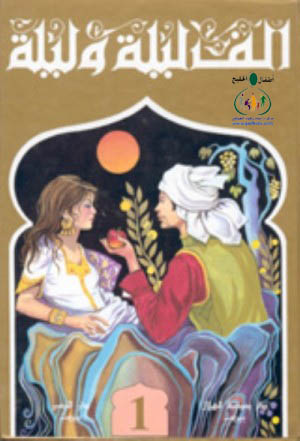
Shahrazad Goes Live

I don't always agree with Fatima Mernissi, but she does have the most fantastically bizarre and yet wondefully commensensical ideas.

In 'The Satellite, The Prince and Sheherazade', she explores "the empowerment dynamics of satellite broadcasting" and "Arab audiences' fascination with strong female hosts and war reporters". These women, who have become household names across the Arab world, fit the "Sheherazade profile, the brainy, self-confident storyteller":


Promoting strong female stars has proven to be a fantastic asset for the Saudis' most threatening TV rival. Al Jazeera is winning crowds every night through the eloquence of its news anchors, Jumana Nammour and Kaduja Bin Guna, and economics expert Farah al-Baraqaui. While state televisions and oil-funded channels traditionally limited their staff by censoring them and denying them the right to decide freely about their program content and what guests to invite, Al Jazeera'ssuccess is due precisely to the freedom its programmers and speakers enjoy, which allows them to become credible communicators. "


Channels that want to be viable are required to rely much more heavily on high-impact 'brands' and product lines. Al Jazeera demonstrated the worth of such assets when it developed a range of programs whose titles and presenters have become household names inside and outside the Arab world," explains Naomi Sakhr, the author of Satellite Realms: Transnational Television, Globalization and the Middle East.


The most famous reporters in the Middle East today are probably the Palestine-based Al Jazeera reporters, Shirin Abu 'Aqla and Jivara al-Badri, who are admired for their courage and professionalism. "History will remember that day when there was no one to speak up in the entire Arab nation, from the Atlantic to the Persian Gulf, but women such as Shirin Abu 'Aqla and Jivara al Badri and Leila Aouda," comments Ali Aziz, the columnist of the avant-garde Egyptian magazine 'Critiques' (An-Nuqqad), "while male leaders and gallon-wearing generals have disappeared from our sight and hearing."

Fairuz's ya sharazade


Katia Nasser discussing her experience as a war correspondent during the 33 day war:


'Free Sami' Button

Tasnim from epiphanies has created a new button, linking to the Reporters Without Borders petition, to support Aljazeera cameraman Sami Alhaj.

Thursday, November 15, 2007

Baring the Burden

Whatever might be said of his fiction, Rudyard Kipling is not the best of poets. His poem "The White Man's Burden" for example, is a hackneyed hymn to the colonialist and his civilising mission.

The motivation was to encourage America’s takeover of the Philippines, which many see as the beginning of a long list of colonial interventions by the former colony, ostensibly founded on opposition to the injustice of the old world.

Kipling’s aim leads him to depict the colonial enterprise as a philanthropic challenge; this notion is of course the usual justification, but that’s precisely the point. The poem is an articulation of the imperial imagination, and the title encapsulates this most basic of its tenets in a phrase that has been appropriated by postcolonial critics of empire (and neo-colonial ones for that matter), for uses other than the ones the poet intended.

On the face of it, the contemporary discourse depicting Africa as a “scar on the conscience of the West” might seem the opposite of Kipling’s “White man's burden”; but while it implies an acknowledgement of guilt (which is a key component driving Western aid to the continent) it is significant that the phrase is in figurative terms a variation of the white man’s burden. The colonised other is a burden which the West must lift, while Africa is a scar the West bears – both passive objects of the West’s desired self-image.

The recent attempted abduction of 103 children in Chad is an example of the manipulation required to maintain this self-image. The European ‘aid workers’ in the case lied to the locals, claiming that they would be setting up a home in the capital N’djamena, offering their children a better life and (crucially) education. According to the group anything was justified in their effort to save the children from death and abuse, but even this Machiavellian rationalization does not hold water, as they had to manufacture their Darfur orphans using bandages and iodine to fake the 'war-wounded' look, as footage shot by a journalist accompanying the ‘rescue mission’ shows.

This journalist did not go to the authorities, and only released his video after the group was arrested; his justification being that he didn’t see the children being abused! Such reasoning is revealing: he would not have considered filming a kidnapping in his hometown without interfering. His excuse is in fact a testament to the power of the simplified and distorted image of Africa projected by global and particularly Western media: there’s a definite sense that, all things considered, the children would be much better off with European foster parents, away from the Africa and its endless troubles. Their anguished relatives’, interviewed on Aljazeera, see things differently.

‘The King Kong’ syndrome is Rey Chow’s name for a form of first world consumption in which the 3rd world is mined for thrilling scenes and stories of human misery. Tragic events supply melodramatic entertainment which is more attention-grabbing and invested with more ‘significance’, because they are ‘real’. Africa, the heart of darkness, is particularly vulnerable and is almost always portrayed as the site of misery.

The news media uses this ‘raw material’ in much the same way as the entertainment industry, to provide viewers with shocking spectacle. A BBC World advert promoting the channels website uses part of a news report; it is filmed from a low-flying plane which is dropping boxes (of aid presumably) over a crowd of people in what looks like a flooded area; the people dodge the falling packages and run after the plane while a reporter perched inside informs us that they are “desperate”. This segment of a report, playing on a laptop screen, is followed by the slogan “news on demand”.

It’s a marketing ploy which, had it been intentional, would have been a witty satire on news channels and their viewers, who together transform suffering into a sought-after commodity.

Virtually all the stories coming out of Africa are of conflict, disease and disaster, with Africans infantilised by being represented as perpetually pleading for nurture and nutrition. Reductive and sensationalist news coverage, coupled by the missionary language of those bent on ‘saving Africa’, combine to figure Western dominance as maternal solicitude.

This message is often taken quite literally, as exemplified by the celebrities adopting the continent as a ‘cause’, or going a step further and adopting a representative child.

‘Eye of the Child’, the organisation that (unsuccessfully) challenged the legality of Madonna’s speeded-up adoption of a Malawian boy, urged the star to consider supporting “community based approaches to care for orphans” as an alternative to efforts that “create and develop a dependency syndrome”. This phrase also perfectly describes the wider charity case approach to Africa.

In the case of the Chad orphans-that-weren’t, Dubai Cares seems to be offering to fund the sort of response ‘Eye of the Child’ advocates, by funding efforts to "trace the children's families, reunite them with their families and get them back to school" as a spokesman said. Highly commendable, but then the spokesman goes on to claim that they “don’t want to get involved in politics”, which seems disingenuous.

China is also going on something of a humanitarian spending spree to raise its profile, and to counteract negative coverage. As a global player it is deploying aid as part of its strategic jostling for superpower status, and Africa is the perfect place to do so.

So it’s no longer just a Western phenomenon, in many countries Africa and Africans are conceived as a burden to enable policies that duplicate the underlying assumptions, and some of the ambitions of the colonial project.

After all even the scramble for Africa at the end of the 19th century was regarded by many Europeans as a laudable charitable endeavour – which should make the current scramble more suspect. In the late 19th and early 20th century, colonial states produced propaganda material to celebrate the occupation and exploitation of their respective colonies, in which a matronly figure represents the European nation bringing the comfort and culture of civilisation to the natives. The feminine ‘soft power’ of development aid is not a modern alternative to the masculine colonial officer lifting the white mans burden, but an attendant concept.

There are certainly differences in the ways Africa is approached, and it is undeniably true that the continent needs and deserves assistance in order to overcome the barriers to its progress; but the Chad case is a particularly extreme example that highlights the problematic aspect of calls to save the continent that history forgot.

The present enthusiasm, being based on a generalised vision of a chaotic mass of humanity in the grip of apocalyptic horrors, has obscured the many positive developments on the African continent: the growing economies, rising living standards, expanding educational opportunities and most importantly the moves toward closer coordination between its states.

This is not to suggest that Africa’s troubles are over, or are on their way to being resolved; but the unrelenting negative portrayals are both inaccurate and unconstructive. Such portrayals are a product of the one-dimensional way in which the continent and its people are perceived, and they reinforce the same stereotypes.

The consequences are clear. The charity concert Live 8 overlooked African artists in its line-up of global celebrities; and while African countries receive aid and debt relief from more developed nations, they find it impossible to get a fair trade deal.
Africans are confined to the role of recipient, rather than active participants who are changing their current reality and deciding their future.

Saturday, November 10, 2007

Chad case

I'm getting a lot sick at the Europeans-in-captivity coverage of the Chad case, the focus is completely on that and I heard very little about the children until Jazeera finally gave the parents and relatives a chance to tell their story - in an interview which the English channel copied and pasted as per usual.

Sunday, November 4, 2007

Economic Refugee

An Unending War, an article I stumbled across in the Tripoli Post, begins:

What ran through your mind? I mean when you read the title to this article. I'm sure you must have thought about physical gun battles

It's by 'Joseph Success', a pseudonym adopted by the writer who is "a refugee living in Libya".

His point is that the idea of third world 'economic migrants', implying a voluntary choice, is nonsensensical in view of the conditions they are escaping, that living in poverty is not like living in a war zone but worse, because there is no end in sight.

The risks taken and dangers, especially those faced by Africans, hoping to reach Europe should certainly dispel any myths of freeloaders looking for an easy ride. And its not like those Africans who actually reach -never mind breach- the fortress impenetrable are guaranteed a dignified life.

Given his self-description I'm assuming the writer is himself waiting to leave the continent, in which case he is an example of the brain drain from which the continent suffers. Africa is wasting the potential of its best hope for the future, those it has used precious resources to educate, by failing to provide them with adequate opportunities.

David McFarlane
, covering the recent conference held in Tripoli on the issue, provides some startling statistics on the high percentage of African University graduates (especially doctors) living abroad.

Some, like Kenya Airways Executive Titus Naikuni, think that Africa can utilise the brain drain to its own advantage, by turning what has been termed its subsidy of the first world ( providing a cheap educated workforce) into an export industry. Sami Zaptia of the TP however argues that their own countries need such highly qualified professionals to develop, and talks about the problems facing Libyans wanting to return.

Friday, October 19, 2007

The Poet And The Journalist

I missed the beginning of Tamim Barghouti's poetry reading - performance actually- in Ramallah on Aljazeera Live, but I could see that almost half the people in the audience were pointing their phones/cameras at him, so I wasn't too worried.

Sure enough someone had uploaded the entire 'concert' on youtube - and I found out that he had been introduced by Jivara AlBudeiri! I thought I recognised her voice, but I wasn't entirely sure until I read this account of the evening from the Al'ayam newspaper.

Perfect right? The next Mahmoud Darwish introduced by the most passionate and committed journalist on Aljazeera. If only words really were more powerful than bullets.


Saturday, October 13, 2007

Friday, October 5, 2007

Freej

I just read (at an unlikely place) this old news: Emarati animation Freej’s winning the country award at the Hamburg Animation Awards.

It’s not like there were any competitors of similar caliber in the region so I doubt it came as a huge surprise.

The viewing figures for this ramadan are a real achievement though, and it’s also credited with “creating a dialogue”, within a society which as one of the design team says “no longer gathers together, not even during Ramadan” except to watch Freej.

It’s a less extravagant claim than Ajaaj the sandman’s proposed role as national identity and native pride booster.

Thursday, October 4, 2007

M7alabiya bil Yamish

Another variation of Ramadan’s repetitively recurring recipe at the Turkish Cookbook: Binnur suggests a layer of fruit compote topped by m7alabiya.

But the only fruit in the house was guava and mango – or so I thought, until I remembered the Yamish.

It being the end of the month, stocks were running low, so I used dried plums as there were more of those than anything else.

Though I’m sure fresh fruit –cherries! -would taste a billion times better, it was a great way to use up the leftovers before Eid. There’s not much you can do with them, unless you have enough left over for a fruitcake.

Wednesday, October 3, 2007

Ramadan Drinks


There’s the sweet
Kasab-el-sukar: sugar cane juice, too cloying for my taste
Kharoub: also used to make sugar, so again it’s a bit like gulping down a glass of thin honey

The thick
Orzata: milk and almond syrup, the perfect combination
Qamar-el-deen: sold as a gooey paste made from dried apricots, which is dissolved in boiling water and then chilled. I like it hot though, and not as a drink: if it tastes like a sauce, and looks like a sauce, then it’s a sauce – in my recipe book anyway

And the thirst-quenching
3er’2 sous: I’m not a big fan of licorice, but I would recommend the drink – if I was a dentist. As a highly effective non-synthetic mouthwash.
Karkadeh: hibiscus flower infusion, very refreshing, but not my cup of tea
Tamer hindi: tamarind juice, literally Indian date, a bit misleading as it’s really sour – which is why I’m addicted.


My friend loves to mix it with kharoub, a sweet & sour cocktail, but on it’s own it’s the perfect thing to switch from musalsal watching to study mode.

Tart, sharp and palate-cleansing, just what I need after pigging out on syrupy pastries while watching Bab el 7ara.

Speaking of which, Duraid La7am’s scriptwriter joke comes to mind “Sidi 3indi ilak musulal 15 7al2a, lau bidak, a3melhalak [stretching gesture] 30”.

But stretching is a plus in this musalsal, as it’s not a case of watching for the plot, but for the nostalgioramic details: the clothes, the houses, the feasts, the celebrations, the women at their housework, the men in their shops, the hakawati’s tales, the songs…and the inventive cursing.

Oh and most importantly, the food & drink.

Unfortunately the plot breaks in at the most awkward moments: after building up a great deal of suspense about something called 7ara2 b2asab3u, the patriarch comes home, has a tiff with his wife, and pronounces the dreaded “inti 6ali2”.

I mean they’re obviously going to get back together, but how are we supposed to find out what this exotically named dish is when Suad Khanum and her girls are too busy weeping and wailing to finish cooking?

A Coptic Christian gives his views on what non-Muslims really think of Ramadan


By Marwa Helal in Egypt Today

Ah, Ramadan for most of us it means warm, glowing fawanees (lanterns),hurried meals before dawn, faith-testing traffic, late nights of prayer, feasting and family bonding. But what does it mean for the other 10 percent or so of the population — the Coptic Christians and people of other religions who endure the month with us? Looking for an honest answer, I met with a good Coptic friend at a local café, who agreed to share his thoughts but only on condition of anonymity.

“The printable answer is, ‘Yes’,” he pauses. Then, “I enjoy sharing the festive feelingof Ramadan with my fellow Egyptians, the majority of whom are Muslim,” he says. “But truthfully, everything — from the increase in car accidents to the incredible amount of noise during the day combined with the general lack of productivity — makes me say, ‘No, I’m definitely not looking forward to it.’

… “Ramadan has definitely changed over the years, I feel it most when I exchange greetings with my Muslim friends. I remember with my parents’ generation, their friends would come over for our holidays and we would do the same and you would really feel that there was something in the ‘kol sana wentu tayibeen.’ Now, we simply exchange these words of greeting, but the feeling just isn’t there and I don’t know why that is.

“I think Egyptians have become more and more stressed over the years — I don’t think it has anything do with the fasting, though, it’s just the general stress of dealing with more traffic and the increase in population. But I don’t recall ever seeing them so tense. And I think to myself, ‘They’re supposed to be more tolerant during Ramadan, that’s the whole point, but here they are, behaving in the complete opposite way.’

I just don’t get the paradoxical mindset of people who seem to think Ramadan is the perfect excuse for road-rage, rudeness and generally obnoxious behaviour.

It’s a month of spiritual discipline to make you into a better person, and it’s not just food and drink that break your fast! And as to laziness, if you’re going to sleep through the day, then why bother fasting?

It’s not all negative though:

“My Muslim friends never leave me out either. It’s nice when I get invited along to iftar because then we really are sharing in the spirit of Ramadan. Not to mention the wonderful quality and quantity of food — it’s amazing. My favorite foods that we don’t get any other time of the year are khoushaf [dried fruits soaked in water] and qamar el-din [apricot nectar].

Which is wonderful and heartwarming and all…but isn’t it blasphemy and sacrilege to describe khoushaf as “dried fruits soaked in water”?

Tuesday, October 2, 2007

Cardamom Cream with Pistachio and Almonds

An Afghan version of Mhalabiya - the same creamy texture but the flavours are deliciously different. Perfect for Ramadhan when m7alabiya is a staple on every Su7ur table, and the dessert and snack of choice as well:

Cream (cheat's option: use a ready m7alabiya mix and add extra cornflour)
1/2 a cup cornflour
3 cups milk
1/4 cup water
3/4 cups sugar
a pinch of salt
Make a smooth paste with the cornflour+ 1/2 a cup of milk + the waterPut the rest of the milk in a heavy bottomed pan, add sugar and salt and place over low heatWhen the sugar is dissolved and the milk is wam add the cornflour paste, and whisk

Crunch
1/2 a cup chopped almonds
1/2 a cup chopped pistachio nuts
Add the nuts and continue stirring with the whisk until you have a thick custard like consistency

Spice
1 tsp ground cardamum
pinch of saffron powder (this really is gourmet m7alabiya)
Add the spices and simmer gently for another 5 minutes, stirring occaisonally

Present
Pour into individual m7alabiya bowls, even out the surface with a spatula and decorate with lightly roasted chopped nuts and some ground cardamum

Saturday, September 29, 2007

“Bushra is Madeline...because she’s blonde!”

was how Alarabiya headlined a report on the hullaballo over the cropped, blown up out of all proportion photo of the ‘Moroccan Maddie’.

The channel interviewed the Ben3isas, who said the first journalist didn’t even bother telling them anything. They were just asked to pose with their daughter because they looked like ‘such a nice local family’.

Then the media circus descended on their village, and now that they know what all the fuss is about the parents are worried about their daughter’s safety.

This is obviously an understandable reaction to what they’ve been exposed to. Although Alarabiya seemed to participate in the media hysteria when they suggested the Moroccan government should do something to ‘protect Bushra’.

Anyway Alarabiya’s headline sort of sums up underlying assumptions that lead to so many Madeline ‘sightings’ in North Africa. As the Daily Mail has it, the Berbers, “unusual among African people for having a strong blonde gene”, are responsible.

It’s sort of weird how it works. Because it’s not just about colouring. It’s about props. The parents and siblings were on Alarabiya, and there just isn’t the startling contrast of skin colour inevitably mentioned as the reason for suspicion. The (in?)famous photo by the Spanish tourist would not have made the Ben3isa‘s seem like a gang of malicious Muslim Gypsies if they were dressed differently. As Bushra’s mother told Alarabiya, they were walking to the bus stop…what could be more common-ordinary?

But the headscarves, as one sharp-eyed blogger points out, marked them off as ‘Muslim Moroccan slave-traders’. The post goes on to identify the wisp of hair and fraction of a face in the photo as Madeline...supernatural powers? Exactly: “ I have long had an uncanny knack for identifying people beneath even Hollywood makeup or from afar” Wonder if his skills are being utilised properly in the ‘war on terror’?


Back in May The Times had a piece on the contemporary version of fairy changelings and Gypsy child-snatchers surfacing in coverage of Madeline’s disappearance: the idea that there are “organised bands of evil, swarthy foreigners grabbing our babies to flog in their vile markets”.

It’s amazing how in tune with capitalism urban mythology is, everything is about supply and demand:

In Southern Europe tourist tots are kidnapped and sold to rich childless local couples who’ll pay extra for blue-eyed blondes.

And as for North Africans…someone at yahoo answers has it from “a reliable source that in such places (arab type countries) that blonde hair/blue eyes/ white kids generally are seen as very beautiful and men go nuts for western women! but of course western women arent generally muslim or respect the ways of muslims so a western child would be sought after as it can be made muslim - so in that - there is high demand for such kids! ie there is a market for it!”

Wednesday, August 15, 2007

The Making of a Saint


With my parents coming from opposite ends of the country I spend a fair amount of the summer with the Libyan landscape whizzing by the car windows. The one constant feature, from east to west, and even the desert in between, is the Maqams.

Domed white buildings, built over the tomb of Wali, and all marked as such by a profusion of green banners, are just everywhere. Perched half-way up a hill in the J'bal Alakhdar, surrounded by a rippling sea of wheat, golden in the sun light; in the middle of an almond orchard, where goats prefer it's cool shade to the trees' more patchy shadow; or on the right hand side of a much used desert highway alongside petrol stations, truckers restaurants, and the occasional sheepherders' village.

Which was why I wasn’t surprised when, driving back from a cousin's wedding, we drove by a Saints tomb right next to the main road into Tubruk. It was larger than usual though, with quite a few cars parked nearby and people milling about.

I thought they were just using it as a place to rest, as travelers often do, for which reason Maqams, like roadside mosques, are never locked, and sometimes don't even have a door.
But no, this was the tomb of the Mujahid Yunis Hashim, a Maqam so famous I was told, that even now, with such superstitious practices on the decline, there were visitors from all over the Eastern provinces.

My uncle filled us in on its story: apparently the grave belonged to a Shaheed from the Jihad against the fascist occupation, who volunteered to hold off the Italians soldiers after a skirmish, giving the others time to escape.When his body was recovered and buried, some people, hearing his story, and the fact that he had been a member of one of the more mystically prone Sufi tariqas, began visiting his grave to seek blessings from one they considered closer to God.

(To those who think Sufis are a quiescent bunch, too busy chanting and spinning in circles to know, or care, if the Ka’ba was nuked: a ‘Sufi Jihadi’ is not an oxymoron)
So Yunis Hashim became a Wali of sorts, one to whom people would turn for guidance and example, and sometimes mentioned as an intercessor in a du’a, which is as always addressed to God, but prefaced by a formulaic reference ("By the high worth in which you hold Si ...") to a Wali.

With time the tomb was built, then a Maqam was added over it, and gradually gifts of tomb covers and wall hangings, without which no Maqam is complete, were embroidered by women fulfilling a vow or in gratitude for a granted prayer.
But there was still another stage in the evolution of this Maqam, which was responsible for its remarkable - I would say anachronistic-popularity.Sometime shortly before the sanctions regime ended a family, on their way to Egypt to treat their crippled daughter, stopped at this Maqam for a rest, as I had imagined the present crowd was doing. The girl was left inside the Maqam with her brother, as she was really suffering from the long journey, while the others went to get supplies from a nearby village.
When they returned they found the children asleep, and her father bent over her to wake her up, and as soon as he said her name -so the story goes- she stood up as naturally as any healthy child.The overjoyed father donated the money he was planning to spend on her treatment to extend the Maqam, whose fame has spread so widely that it now draws pilgrims by the score each week.

Wednesday, August 8, 2007

Leonardo's mother: an Arab slave?


The Arabist has this from Discovery:

Da Vinci Fingerprint Reveals Arab Heritage?

Rossella Lorenzi, Discovery News

Oct. 28, 2006 — Leonardo da Vinci may have had an Arab heritage, according to Italian researchers who have isolated and reconstructed the Renaissance master's fingerprint.

The fingerprint represents the only biological trace of the Florentine genius, said Luigi Capasso, an anthropologist at Chieti University...Fingerprints are unique and don't change over a lifetime. Analysis of the skin's arches, loops and whorls — a science known as dermatoglyphics — has shown that there is a link between fingerprints and populations.

In the case of Leonardo's fingertip, patterns and ridges pointed to the Middle East, the researchers concluded. "The fingerprint features patterns such as the central whorl that are dominant in the Middle East. About 60 percent of the Middle Eastern population display the same dermatoglyphic structure found in the fingerprint," Capasso said.

The discovery would support Vezzosi's claim that Leonardo's mother was not a local peasant girl as previously thought, but a Middle Eastern slave. According to Vezzosi, records unearthed in Vinci offer substantial evidence that Leonardo's father, a craftsman called Ser Piero Da Vinci, owned a Middle-Eastern female slave named Caterina.

"It was common in 15th century Tuscany to own slaves from the Middle East," said Vezzosi. Indeed, in 1452, the same year of Leonardo's birth, a law was passed in Florence that gave slave owners greater rights over their slaves. Shortly after the law was passed, Ser Piero married Caterina off to one of his workers. The woman had just given birth to a boy called Leonardo.

Saturday, August 4, 2007

Stupid Americans - Uncle Sam inspires 3ami 3arabi


افتراء

شعب أمريكا غبي
كف عن هذا الهُراء
لا تدع للحقد
أن يبلغ حد الفتراء
قل بهذا الشعب ما شئت
ولكن لا تقل عنه غبي
اأيقولون غبيا
ًللغباء؟
احمد مطر -


Whether it is calumny, as the title of Ahmad Matar's poem claims (only to be contradicted by the text), to call American's stupid seems a moot point; the world having decided that the its sole Superpower is characterised by this trait above all others.

And the American as voter is particularly afflicted with a lack of brain power, eating up such patent whoppers as in Steve Brodner's cartoon.

You have to wonder though, with a media driven by the bottom line parroting the same message, if it isn't what they want to hear. And if the leaders the rest of the world find so ridiculous might be elected because their policies, and even the annoying mannerism, are what appeals.

The nation of shopkeepers appreciates a Tom Brownian PM who quotes his school motto in his inaugural speech, and the Americans prefer a straight-talking cowboy. To each his own.

And as to foreign policy, those who celebrate the fall from grace of neo-cons as the awakening of the gullible and naive seem to ignore the fact that their detractors feel the need to compete.

With Iraq burning, and the rest of the region apparently gearing up for a similar inferno, we have more than our share of certified experts in the global phenomena of Yankee bashing, most of whom have a sub-speciality in attention-deficiency, short-term fixation and sheer stupidity studies.

From the perspective of a local groundling, watching the US of A's military and diplomatic [sic] machine wreak havoc across it's current stomping ground, America appears as a lobotomised blindfolded colossus on the rampage.

Seeing such a monster - and the destruction it leaves in it's wake - up close and personal gives an intensity to the anti-US rants, and enough emotion to inspire poetry on their stupidity- as in the Iraqi Ahmad Matar's poem above, and the Lebanese Khaled El-habir's below:

ابانا الذي في السما

ابانا الذي في السما انت عراسي انما عندي كلام
في كم سؤال بها لعمر اجتمعوا براسي من القهر والانهزام
ما هيدا مبارح كان ولد كيف تبلع كل البلد... اول سؤال
مبارح اخونا كان فقير وهلق تيابو من حرير... تاني سؤال
ليش العرب بعد النفط صارت حضارتهن زفت... تالت سؤال
كيف العدالة بنعدم والحرية بتنحرم... رابع سؤال
كيف بيخلق واحد زعيم والتاني ما عندو ملّيم... خامس سؤال
كيف اليهودي مضطهد، ما هوّي سارقلي بلد... هوني السؤال
كيف العراقي بينقتل ما قالوا حرية وعدل... سابع سؤال
ليش الضمير بيحتضر عنا وبيضلو مستتر... تامن سؤال
كيف الامركاني حكم، هيدا الغبي بين الامم... تاسع سؤال
ليش الفتك فينا حلال، فكرلي بهذا السؤال... عاشر سؤال
هيدي وصايا يا ابي... ارشف وصفها بمكتبي كي لا تزال

ابانا الذي في السما انتا عراسي انما عندي كلام
ابانا الذي في السما انت الهي انما هذا حرام
اخيراً ليس آخراً ما يطلع حكيي نافراً... ولا تعتبرني كافراً
اطلع فيي يا ابي... ساعدني خطيّ يا ابي ...عليك السلام

خالد الهبر -

Not since their Southern neighbours gave vent to their furious anti-gringo rage amid uncivil proxy wars, a sting of coups, and a plethora of military dictators have Americans been reviled in verse so frequently.

Ahmad Matar and Khaled El-habir are not among the more passionate practitioners of this art form though.

افتراء (Calumny) is one of Matar's shortest, and in comparison with the rest of his poetry is positively mild...which is probably why it's also one of his worst, since his genius is for Swiftian humour. He reserves his venom for certain Arab rulers, and is perhaps even harsher with their people, who seem to have resigned themselves to endure oppression as their inevitable lot.

I must say his Lafitat is a bit extreme, and although I can understand the frustration that prompts it, blanket statements regarding ALL Arab rulers and the Arab people as a whole don't seem to leave the all important chink of possibility open.

Khaled El-habir's ابانا الذي في السما (Our Father which art in heaven) has a confused speaker questioning injustice, and specifically asking ten questions (for which no answers are provided, although something like Naji Al3ali's cartoon is implied) out of which only three (Palestine, Iraq and "how the stupid American rules the world") acknowledges the American elephant in the Arab living room.

The rest deal mostly with issues of reform and good governance, as talked up but not practised by various Western leaders.

For example:"how is it that he has swallowed the country, only yesterday he was a boy", which just conjures up that memorable Saad Hariri Jack Straw moment (to my mind anyway).

Neither Matar nor El-habir ignore America's role, but they realise that العيب فينا the main problem is not with America, but with us.

In the words of Abu Al-qasim Al-shabi, as taught to every schoolchild:

إذا الشعب يوماً اراد الحياة فلابد ان يستجيب القدر

Thursday, August 2, 2007

Muslimas' Glam Mags Galore

A Magazine For And By Today's Modern Muslimah
By Muna Shikaki

Azizah ($8.50) is very much a glossy women’s magazine. It has articles on fashion, food, travel, books and relationships. Its 112 pages contain articles, photographs, and illustrations, and a quarter of its pages are devoted to ads. The magazine’s “Well-Being” section covers topics like massage and aromatherapy; its “Destinations” section mentions places to pray throughout the world (including one on mosques in the U.S. Virgin Islands).

Fashion sections have models wearing modest clothes, some with backdrops of the beach. A long garment that covers most of the body from the neck down, the djilbab, is modeled with a college backdrop (“This denim-look djilbab is perfect for the campus.”) A “wrap and snap” black djilbab looks as if it could be put on in a second.

Yet the magazine also delves into serious topics such as AIDS in the Muslim community, birth control in Islam and polygyny. It includes headlines like “America’s First Muslimah Judge” and “How Inclusive is the Muslim Community of the Disabled?”

...Though the magazine doesn’t posit itself as a controversial magazine, it is not complacent. Sometimes, the simple act of covering a topic can be seen as taking a stand.

But some of the most important articles are not necessarily the most provocative ones. “How Inclusive Is the Muslim Community of the Disabled?” questions the absence of ramps for wheelchairs in mosques. In the same issue, a disabled woman writes a heart-wrenching story about making the pilgrimage to Mecca in her wheelchair.

The article, and the magazine in general, reflects a “multiple critique,” a term championed by Miriam Cooke, professor of modern Arabic literature and culture at Duke University, for the way in which Islamic feminists critique Western culture and Islamic patriarchy without abandoning their religious identities. “The ability [of Muslim women] to say, ‘I don’t like what the Saudis do’ doesn’t mean I can’t also say ‘I don’t like what Bush or a Muslim cleric is doing,’” Cooke said. “I can talk about all these various communities to which I belong.”


Muna Shikaki, who wrote the above in the New York Review of Magazines, is one of Alarabiya's corespondents in North America.

Her colleague Nadia Bilbasey had a report on a teen-Azizah magazine: Muslim Girl, which both the non-hijabi (wearing an 'Allah' pendant) and the muhajaba girls she interviewed enthused over.

The Magazine's Editor-in-Chief, Ausma Khan, was interviewed by Alsarq Al-awsat

What do you hope to achieve?
So many things! We want to make a difference in the lives of American Muslim girls by giving them a forum where they can express themselves and see their stories told in a positive and celebratory spirit. We want to give Muslim girls the tools for empowerment, education and enlightenment. It can be really difficult and isolating for Muslim youth when the only images they see of themselves are negative or frightening ones.

We are seeking to provide a counter-point and we hope to bring out all those wonderful stories about Muslims that are rarely told. For example, one Muslim girl helped others in Malawi through the Peace Corps, another American Muslim girl worked with tsunami victims in Indonesia. We also feature an amazingly accomplished Muslim woman who is a BBC news anchor, a lawyer and journalist (Mishal Hussain). There are wonderful things that Muslim girls and women are doing every day to make a difference to their families, schools and communities. We think that telling stories like these will give Muslim girls confidence and will re-affirm their pride in their own heritage and values.

At the same time, we are showing how much a part of American life Muslim girls are and how much they have in common with other teens. When you clear up misunderstandings and provide information to people who genuinely desire to know more about Muslims, that’s bound to make a positive difference in this world – individual to individual, community to community, and nation to nation.

What is the process of choosing the cover girl and is it a requirement that she wears Hijab?
We’ve asked girls to write in to us via the website if they would like to be on our cover. We are looking for girls who are proud to be American Muslims, who find their values empowering and who want to reach out to other girls. As long as a girl subscribes to Islamic values and dresses modestly and with self-respect, she does not have to wear the hijab to appear on our cover. We are looking for a girl who has a great story. Our first cover girl, Wardah Chaudhary, was really excited about the concept of the magazine and really keen to reach out to other Muslim girls and share her own experiences. She is a bright, articulate, wonderful young girl whom we think other teens will look up to and identify with. Again, we celebrate diversity and we seek to be as representative and inclusive as possible.

Du3a' Al-istikhara

اللهم إني أستخيرك بعلمك و أستقدرك بقدرتك و اسألك من فضلك العضيم فإنك تقدر و لا أقدر وتعلم و لا أعلم و أنت علام الغيوب
اللهم إنْ كنت تعلم أن هذا الأمر خيرٌ لي في ديني ومعاشي و عاقبة أمري فاقدره لي و يسره لي ثم بارك لي فيه
إنْ كنت تعلم أن هذا الأمر شرٌ لي في ديني ومعاشي و عاقبة أمري فاصرفني عنه واقدر لي الخير حيث كان ثم أرضني به

Wednesday, August 1, 2007

Sandcomics - Arab cartoons and national identity

This advert has been running on all UAE channels for a while, and what with the repetition and the cool graphics, I felt compelled to go check out the website it advertised.

Turns out there is a new bilingual Emarati comic that will be distributed both in printed form, at an as yet unspecified price, and an online edition will provide a downloadable page every day.
The idea, in the words of Ahmad Almansuri, is that it should "promote national identity and show the traditions of this Gulf state to visitors "

I find the whole concept of 'native pride' a bit iffy, and as for Sandman as the incarnation of the spirit of the past ...as Asia said "DAMMIT! muslims PLEASE be original ".


Some of the artwork is very good, but not up to the standards of the TV trailer. And the super hero Ajaaj doesn't seem to have been fully developed - what can you say to this for example:


Then there's the name.

3asifa Ramliya (Sandstorm) not being a very catchy, they came up with Ajaaj. Which has a sort of nice ring to it…only instead of conjuring up some primeval force bearing the ‘values of the desert’ into a futuristic city, it is - to me at least- synonymous with those ‘ayam 3ajaj‘ when you’re cooped up at home, with nothing to do but think about whether to dust or not to dust.

So overall it was a bit disappointing. I was expecting something like the Khaleeji cartoons last Ramadan, the Saudi and Emarati ones were pretty awesome.

Almost every national Arab channel has a short let's-make-fun-of-ourselves cartoon during the fasting month, usually aired around if6ar time, for a local audience.


Highlander has blogged about our own 7aj 7mad, the great dissector of Libyan mores, who desperatly needs a make-over as her photo makes clear.


Last year the Saudi's aired يوميات مناحي on their pan-Arab mbc - it dealt with topics from youth unemployment to Iraq. Sort of like 6ash ma 6ash but more understandable :P, so it was the content rather than the technical presentation that mattered.

It was the Emarati الفريج however, broadcast on Dubai, that broke the usual format of a well-meaning male fool as the central figure and representative of the 'national character'.

Instead there were four older Emarati women of varying ethnic and social backgrounds, personalities, and I.Q levels. It was visually visionary too, being the first Arab 3-D animation.